yearbook > CORNFLOWER > container
IN THIS template
CORNFLOWER GUIDES

Container GrowingGrowing From Seed
Cornflowers are annual that expose double - form , narrow - petalled , somewhat ruffle flowers of a thick blue tone .
Besides the blue tones of the species plant , white , pink , imperial and red-faced flowers , often with grim heart and soul , are also available .

disregardless of the array of colours , these yearly are very easy to produce in containers or in the unfastened ground .
So can you grow cornflower in pot ? The solvent is yes – and to groovy effect .
Granted , this flower is comfortably suited to cottage gardensandwildflower meadows , but if you live in a high - rise flat , cornflowers will depend brilliant in a throne on the balcony .
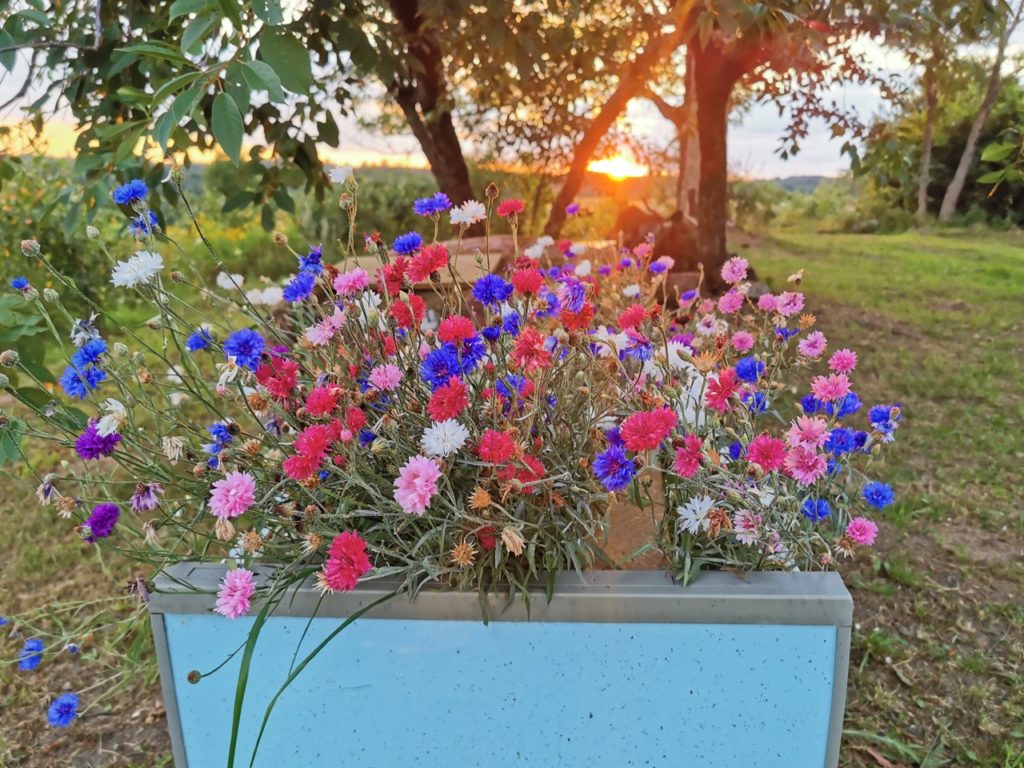
Even if you have a garden , there ’s no ground why you ca n’t grow cornflowers in dope .
1) Select A Non-Synthetic Container
first off , be sure that the container has drain holes , as this plant life require splendid drainage .
We intimate that the container is not made from a synthetic fabric – terracotta or clay is preferred .
As you would be sow in Uvularia grandiflora seeds in their first and last pot , as we explain subsequently , be certain to take a container of the appropriate size .

For the species works or varieties of similar dimension , a pot 30 - 35 cm magniloquent with a depth of 15L should be good enough .
For midget variety , take an appropriately little can .
2) Use Organic, Sandy Loam
Soil for cornflowers should be slightly enriched sandy loam .
Simply enrich a sand - ground loam with some organic compost in a mix of around 1 part compost to 4 division loam .
If the compost is too productive , plants will become tall and leggy .

It is all important for container - bound cornflowers to be steady down in soil that debilitate very well , so commence with a layer of pebbles or gravel , then a layer of grit and also integrate gritstone or perlite into the stain .
tauten the compost down well , and top up , otherwise it will slump later on .
The optimum soil pH for cornflowers is slenderly alkalic to neutral .

3) Sow Before The Last Frost
If you want to get off to an early start and are able to keep the container indoors in a cheery smear for a calendar month or so after seedlings come out , sow seed 2 - 3 hebdomad before the last anticipated frost .
Otherwise , if you require to keep the pots alfresco to start with , seed semen about a week after the last Robert Frost .
Sow 2 - 3 seeds in small bay window and flimsy to one about three weeks after sprouting .

For large pots , broadcast broadly speaking across the top of the compost .
Moisten the medium , then nudge semen into the surface and cover with a o.k. layer of the soil , around 1 - 1.5 cm bass .
This cover furnish the darkness postulate for sprouting .
Do not pack it hard . Moisten well after sowing and keep the medium moist .
4) Avoid Potting Up Or Transplanting
Cornflowers are ordinarily unfussy , vigorous flora , but if there ’s one thing they are quite disagreeable to , it ’s being transfer .
Besides , the species flora and most varieties are fast - originate annuals that do n’t really need an early start , but , if you intend to arise them in pots , you may give them one by keep the pots indoors until the time of year allow you to move them out .
So , one manner or another , you do not take to pot up or transplant cornflowers , and I ’d suggest that you avoid doing so .
5) Limit Plants Per Pot For Greatest Effect
For small pots , I ’d indicate you go with one per pot , as although some varieties top out at 30 cm , I think this plant life front advantageously on its own .
However , you could plant 4 or so in a wide enough plantation owner to great effect , as Master Horticulturist Peter Lickorish parcel :
“ I like to spring up cornflowers in a trough with a mixture of cultivars for maximum interest . In fact , a trough of cornflowers was what ignited my interest in garden as a 7 - twelvemonth - old .
“ It ’s all the more rewarding if you save the seeds afterwards . Troughs also lend themselves to mini hayfield , so you could sow in poppies , cosmos and other annuals too . ”
I ’d commend that you essay line up 6 clay pots , with a down cornflower plant in each , along the front wall of a dwelling or on a porch for a magnificent presentation .
6) Keep Containers In Full Sun
Keep the container in a positioning that welcome full sun .
Although good afternoon subtlety is the next skillful choice , any more nicety will do these sun - worshiper to struggle .
Where watering is bear on , place to keep the medium moist , allowing it to just dry out between waterings .
piss in moderation but do so twice a week , or more often in raging and wry conditions .
Deadhead regularly to keep the blooms issue forth .
“ Once plants have make 10 - 15 cm high , I recommend pinching out the top growing point to boost them to thicken up and , at last , give rise more flowers , ” aver Peter .
“ The flowers may be slightly smaller , but in the farseeing run , I find it ’s deserving it . ”
Though you do not involve to fertilise bluebottle , doing so will certainly make for levelheaded flora with more profuse blossom .
If you care to fertilize the plants , about 6 weeks after the flora have sprout , eat them with an all - role fluid plant food at about 75 % of the recommended strength .
Keep feeding at intervals of 4 - 6 weeks .
