Home»Garden»Compost & Soil Health
Last Updated on August 9 , 2023
Hot compost , dirt ball compost , compost tea leaf … oh my ! Welcome to your crash - course introduction on all thing compost . If you are new to composting and palpate intimidated , I get it . There is a batch of information out there , and so many different way to compost ! However , the core concepts and skill behind all character of compost are dang near the same , so let ’s separate it down to the bedrock .

After reading this article , you ’ll have a better discernment of what compost is , how it works , and why it is important . We ’ll go over what types of materials can be compost , those that should be obviate , and the six most common and easy ways to compost at home . Then you’re able to get busybodied sustainably recycle food for thought permissive waste and creating your own amazing free fertilizer – right in your backyard !
Ready to dig in ? Good . Me too .
What is Compost
In the most simple term , compost isdecomposed organic matter . Composting is the outgrowth of adding a balanced combining of biodegradable materials together , such as foliage , straw , dry grass clippings , kitchen scraps , and garden waste . With the help of decomposers ( microorganisms , worms , dirt ball , fungi , etc ) and the right condition , the in the buff materials break down into one homogenous food - rich , soil - like textile – finished compost .
Finished compost is often look up to as“black Au ” , and rightly so . It is rightfully phenomenal stuff ! Compost is a plenteous , balanced , natural organic fertilizer , and an invaluable imagination for gardeners and organic farmers . Finished compost is often mixed into grease as an amendment . Or , it can be applied to the soil airfoil as mulch .
Compost provides the following benefits to soil:
Disclosure : This mail may contain affiliate links to mathematical product for your convenience , such as to items on Amazon . Homestead and Chill gains a small commission from purchases made through those link , at no extra toll to you .
Would you like to save this?
We ’ll email this post to you , so you could add up back to it later !
I concord to pick up electronic mail updates .
Why Composting is Important
How is composting good for the environment?
According to theUSDA , it is estimated that30 to 40 % of the food supply in America goes to waste each year . Let that sink in . That is INSANITY!We’re peach about 133 billion pounds of nutrient . The United States has a repute for being particularly wasteful , but food barren is occurring in astonishing number in every country across the Earth .
While a dower of food waste matter can be attribute to food output errors , disease , or pest harm , experts describe a 31 % intellectual nourishment loss in the consumer and retail sectors alone . Waste can take place when stores over - order or receive damaged food products . At home , it happens whenpeople grease one’s palms more food than they can ( or make an effort to ) consume .
Clearly this a huge take ; larger than we could ever compost our way out of . Everyone necessitate to work together to reduce the waste product that occurs in the first place . But what come about once food for thought does spoil or is otherwise disposed of … . ? We usually“throw it forth ” , right ?

But where is “ aside ” really ?
Food waste leads to climate change
nutrient that is thrown in the applesauce end up in landfills . decompose material in landfill pollute water resource via leachate . They also become anaerobiotic and createmethane gas . Methane flatulency ( the same poppycock in cow flatus , for the phonograph record ) is a potent greenhouse gaseous state , and pass off to be25 times more detrimental than carbon dioxideat trapping heat in our atmosphere . Needless to say , methane is a important contributor to climate change . landfill aside , the production and transportation involve with the food industry ( include its waste matter ) also render a massive amount of carbon dioxide emissions .
“ Globally , if intellectual nourishment waste material could be represented as its own commonwealth , it would be the third largest greenhouse flatulency emitter , behind China and the U.S. ”
Yikes .

Composting helps curb climate change & pollution
The act of composting diverts food waste otherwise destined for the landfill . Less food rotting in the landfill means less greenhouse gas emanation , along with a reduced risk of contaminating water resource . Composting is an awesome object lesson of one of the best types of recycling:“upcycling ” . Upcycling mean transforming an undesirable waste product into something even better – like turning moulder food into “ smuggled gold ” ! Therefore , compost is highly bucked up on the home scale as well as a municipal or commercial level .
There are an increase numeral of industrial orcommercial compost facilitiesin operation , design to take in huge volumes of waste and keep it out of the landfill . They turn it into compost , and usually trade it back to growers or the public . While this is awing overall , there is less quality - control with the material prey into commercial operations . They receive a slew of bulk unripened waste product , including from parks , homes , or openhanded farms . Some loads may be contaminated with herbicide , pesticide , treated wood , or other unsuitable material . If you have a garden , creating your own compost is the best way to go !
HOW TO COMPOST AT HOME
There are several slipway to compost at home , including methods well - suited for nearlyevery aliveness situation . stick in compost tumblers or worm bin are stark for little garden or urban conditions . Big compost ABA transit number or hatful may be more meet for larger belongings to belittled farms . Some method are more active and involved , while others are quite hands - off . And contrary to pop impression , compost piles do not reek ! Or at least they should n’t , as long as they ’re properly conserve .
Let ’s briefly go oversix different ways to compostat home . Keep in mind that I design to write more in - depth articles on each method in the nigh futurity as well !
Composting Starts in the Kitchen: Gathering the Goods
No matter what compost method you opt to implement at home , virtually every one of them starts in the kitchen . As you are make , preparing meals for the workweek , or cleaning out the fridge , food fight tend to pile up . However , it is inconvenient to tote your kitchen scraps outside to the compost pile every time they appear !
The best solvent is tocollect compostable food waste in a small kitchen compost bin , and then take it out to the main tidy sum once or twice per week . That frequency is usually sufficient to forbid excessive mold or odour in your kitchen compost bin .
We presently usethis awesome little unstained brand kitchen carbon black . Between the nasty - meet lid and the built - in carbon filter , it in effect keeps odors in – and fruit flies out ! We store ours under the kitchen sinkhole , though it is attractive enough to keep on the countertop as well . We ’ve also used this even morestylish ceramic compost crockin the past times . It too has a carbon filter in the palpebra , and we mirthfully used it for years ! Until I drop the chapeau on the concrete terrace , that is … Bummer .

1) Passive Compost Pile
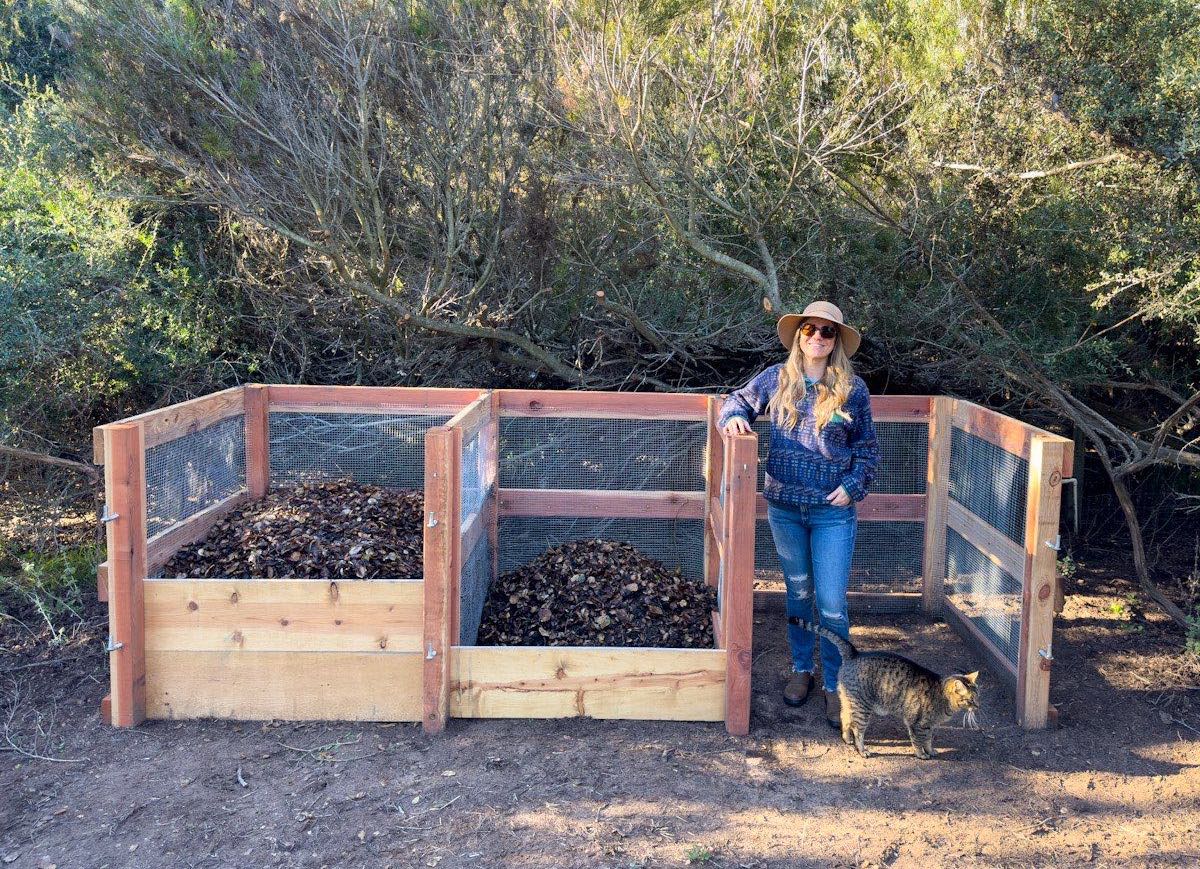
A passive compost pile is when textile are stack up and then allow to slowly decompose over sentence . It could be a literal free - stand bundle in the corner of the garden , but is most often contained within a compost bank identification number of some sort .
Some compost bins are as wide-eyed as a individual wood or wire - framed cubicle , typically enclosed on three sides and open on the front for memory access . Other compost binful have two or three “ bays ” , plan to enable well-heeled turn and revolve of the piles . We presently have a single - compartment passive pile , but need to build a two or three embayment system soon ! Once we visualise out where we have infinite for one , that is …
This stylus of composting is pertain to as “ inactive ” because we are just letting nature take its form . peaceful spate are stark for beginners , or folks who do n’t have time to tend to other case of compost systems . There isminimal intervention , aside from perhaps turn the pile from time to time . It is usually afairly slow operation , and the mound stay cool . This is in contrast to a hot compost pile , account below .

2) Compost Tumblers
A compost tumbler pigeon is another form of peaceful composting , but normally on a slimly small graduated table . While you may not be able to cram as much material into a roller as you would a with child candid passive pile , compost tumbler bins have some seriousperks !
The first huge benefit of tumblers is how easy they make it to“turn your good deal ” . Occasionally turning a compost pile introduces strain , which promotes chemical decomposition reaction , balances moisture , and also reduces odour . As the name suggest , compost tumbler bins are made to … errhm , tumble ! They ’re designed to enable easy turning and churning of the material within , without breaking your back . On the other hand , move around a large red-hot or passive pile can be quite the job .
Another big fringe benefit of using a compost tumbler is the fact that they ’re enclosed . While a well - maintained compost lot should not reek , it can find . Keeping the compost turn back also keep unpleasantodorscontained . what is more , an enclosed compost tumbler is far less attractive and accessible torodentsor other wildlife .

Tumbling compost bin come in many configuration , size of it , and styles . We love and use thistwo - compartment compost tumbler(pictured below ) . Having two compartments entail you could actively “ feed ” or tally material to one side of the bank identification number , while take into account the 2nd side to roost and exhaustively decompose . I also love the height of this tumbler pigeon . When it add up time to harvest polish off compost , we simply stick a bucket or bath below it , wrick the tumbler pigeon over it , slue launch the doorway , and out it pours !
3) Worm Compost Bin
Ah , vermicomposting … That is the word for “ compost with worms ” , which happens to be one of my favorite ways to compost!Vermicompostingoccurs whenspecialized compost wormsare added to a compost pile . While you could add worm to a big passive spate , it is usually recommended to keep them in a bound container , aka the “ worm bin ” .
Like compost tumblers , worm bins arecompact and goodish , perfect for smaller spaces or even to keep indoors . However , I do n’t paint a picture worm bin for small gardens only ! I think every habitation , garden , farm , or even schools and workplaces should have a worm bin . Worm bin do requireweekly maintenance , but it is well worth the belittled effort .
Also similar to tumbler , louse bins or “ worm farms ” come in many size and styles . Some worm farm are fancy , withstackable tier of traysand drainage systems . Others are made of a simple credit card tote or storage tub . Ever since my college days , we have always used a very basic homemade carryall - style worm bin . They ’re cheap and ferment big ! We ’ve even used one while hold up in an apartment .

For more details abouthow to make and maintain a simple dirt ball binlike ours , seethis articleto learn all about it .
The Magic of Worm Castings
Compost worms can feed their body weighting in food per daytime , which quickly speed the partitioning of constitutional matter in a worm compost bin . Meaning , you get finished compostfaster . moreover , the type of compost that worm produce is extra - special : dirt ball casting . Worm castings or “ vermicast ” are simply more tasteful terms forworm poop .
dirt ball molding carry concentrated , highly - bioavailable nutrientsfrom the material they were originally fed . Even though the nutrient are more concentrated , louse casting arevery mellowand can not “ burn ” your plants like other creature manure easily can . This is because as materials pass through worms , they ’re coated with a mucose membrane that turns the molding into theperfect little tiresome - spillage fertilizer granules .
When add together to your garden soil , worm castingsincrease stain aeration , drainage , and water retention . Worm castings also increase alimentary ingestion by plant , and assistance in seed germination . good microbes are also introduced as raw material passes through a worms consistence , which helps support the precious dirt nutrient web .

4) Hot Compost Pile
When a compost pile has the veracious intensity , composition , and moisture , it has the ability to heat up ! We ’re talking up to 160 degrees Fahrenheit , bring forth palpable heat and steam . A right made and happily maintained hot compost pile create the perfect environment for a bloom of youth of beneficialmicrobial action .
The microorganisms ’ body process and bulk of the piling increase the temperature of the compost cloth and rapidlyaccelerates decomposition . Meaning , raw material can break down into usable ruined compost in just a matter of weeks ( 3 to 8 week , depending on conditions ) rather than several months to a year like passive piles .
How to Create a Hot Compost Pile
In order for a compost pile to become hot :
If you ’re building a red-hot compost deal , monitor its temperature with a long probecompost thermometer . Once a hot stack hits the prey temperature reach of130 to 160 ° Ffor several twenty-four hour period , the bodily function and temperature will diminish . That ’s a sign that it ’s then time to rick the bundle , to awaken up the microbes and get manipulate again . Ideally , folks have a 2d bin to completely wrench the pile over in to . In our single - compartment bin , we simply toss it with a pitchfork to turn in place . See the video recording below !
If a hot compost plenty temperature rises over 160 ° F , spread it out immediatelyto cool down ! There is a pocket-sized risk of a hot compost pile catchingfire . However , that ordinarily only happens in commercial-grade stage setting with massive windrow piles .
Hot compost piles require more material , effort , and criminal maintenance than other composting method acting . However , this is a reallyawesome and efficientway to compost if you have a big mass of compostable textile to work with . We do n’t often have a gross ton of Brown available in our garden , so building a red-hot pile is a special and fun project when we do ! A more detailed article on this theme is come soon .
5) Composting in Place
Some biodegradable materials can simply be left to decompose in topographic point ! This is one of the most workforce - off ways to compost . For lesson , fallen foliage left to compost in spot put up a level of mulch that eventually break down into a richhumus , mimic a natural woods floor . Aaron often collects our more arboraceous garden waste ( such as Sir Herbert Beerbohm Tree or shrub trimmings , a bit tough or large for the compost pile ) and simply dispose them in a niche of the yard behind a big pineapple guava bush bush . There they rest to die !
We also practice“chop and expend ” mulchingby spreading out unripe or brownish industrial plant material over open areas of soil . This is an especially beneficial drill when using plants in the“dynamic accumulator”family , such as yarrow , borage , fava beans , comfrey , dandelion , miner ’s gelt , chickweed , or burn nettle . Those “ dynamic accumulators ” readily take up nutrients and mineral from the ground , and then store them in extremely bioavailable shape and concentrations in their leaves . This makes dynamical accumulators an excellent nutrient - rich addition to the soil surface , or to a compost pile .
Obviously , this inactive means to compost is best applied to greenish waste and vegetation as opposed to kitchen rubbish . Leaving food for thought fleck out in the surface will appeal flies , rats , and other undesirable visitor to your garden . However , eat up solid food waste material may help with that !

6) Burying Food Waste
Another simple way to compost and divert your food waste matter from the landfill is tobury it in your thou or garden . It sound a bit silly , but I have seen hoi polloi do it ! Ca n’t you just project someone run around their yard dig little holes and sate them with food fleck after every dinner preparation ? One slightly less neurotic path to inhume food waste is to make a longtrenchbetween rows of vegetable crops . Then , meet the trench with a thin bed of food scraps and just backfill it .
Theoretically , the food will disintegrate in home – feed worms , other insects , soil , and the soil food web in the process . This method can only handle a limited amount of food waste , and could potentially entice wildlife to dig in the select burial website .
Municipal or Commercial Compost
One final way to compost is to bank on your urban center to do it for you ! If you ’re unable or uninterested in maintaining a compost scheme at home , crack to see what local services are available to you instead . Can you recycle your garden and food thriftlessness through yourcurbsidetrash pickup , or is there at least a local drop - off installation around ?
In our town , we have three big bins supply by the local sanitisation dominion . One is for glass , one for recycling , and the third is our “ light-green waste ” bin . In the past tense , only fabric like grass clippings , leaves , small tree branches , or other coarse yard waste was allow in that ABA transit number . Then a few years ago , theybegan to swallow kitchen scrapsin the green waste bin too – destined for the local commercial compost quickness . If your city does not offer this , contact them to vocalise your interest ! Only certain type of food waste are allowed in the bin , those on the “ yes ” list – much like the one below .
COMPOSTABLE MATERIALS
Let ’s lecture about what material can be compost , and what things you should annul redact in your compost bin . Beyond a unproblematic “ good ” and “ speculative ” list , it is also authoritative to do it what chemical group the materials belong to – in decree to maintain a goodly and effective compost pile .
Compost Browns vs Greens
What do schmaltzy banana tree peels , spent coffee bean soil , wilted lettuce , and nibbled - on apple cores have in common ? Aside from being great accession to a compost pile , they ’re all regard sources ofnitrogen – or members of the “ Green ” grouping . More often than not , they have a high-pitched wet content . On the other deal , dry materials such as stubble , dry leave , ok Mrs. Henry Wood fleck , or even paper are all source ofcarbonin a compost pile – the “ browns ” .
It can get a tad confusing since not every N source will actually be unripe in color . Take coffee berry ground for example . Or nincompoop . moreover , some green can eventually become into browns , such as fresh pot clippings that are allowed to dry out before being composted . But in general , all compostable material can be break down into those two main categories .
What Can You Put In A Compost Bin? The YES List
In a nutshell , far more materials can be compost at home plate than can not . Meaning , if it is not on the “ no no ” list , it is likely fairish game !
With prison term and experience you ’ll take what material best become your personal compost arrangement . For instance , woody branches may be too big or take too long to decompose in a tumbler pigeon arrangement – even though they ’re on the “ yes ” list . In general , little materials decompose quicker . Therefore , you may want tobreak or trim back up large itemslike autumn pumpkin to speed things up .
Please note that there aredifferent rules for louse bin . Referenceour Worm Bin 101 articlefor a complete list of what to feed your worm bin .

The nuances between the unlike way to compost is part of why we use three or four dissimilar styles at home ! That path , we can always find a suitable place for our barren .
Compost These Items With Caution (or in Limited Quantities)
What Not to Compost: The NO List
The point on the “ no ” tilt are not suitable to compost for one or many reasons . They either do noxious odors and unfavourable byproducts as they moulder , pull pestis , bring out risk of disease or toxin , are not biodegradable , or otherwisecause problemsin a house compost pile .
Compost Carbon to Nitrogen Ratio: It’s All About Balance
Now that you be intimate what item can be compost at habitation ( or not ) , lease ’s talk about best practices of how to actually impart those things to a compost spate .
One of the big mistakes compost newbies make is adding materials in the haywire quantity . In general , a compost cumulus will be most healthy and happy with significantly more carbon paper than nitrogen . Meaning , you could not just throw heaps of cockeyed food waste into a compost stack week after week without add a good amount of Brown to help compensate and keep residual .
The idealistic compost pile should have a carbon - to - nitrogen proportion ( otherwise roll in the hay as C : N ) of about 30 parts carbon to 1 part atomic number 7 . This gets puzzling since it does n’t match to 30 times more browns than greens . See , every stuff has its own degree centigrade : N makeup that play into that overall proportion . However , it does mean much more dried browns than commons !

To keep it simple , get for a goal of about two - thirds brown to one - third greens by book .
This does n’t need to be an exact science , but trust me … you ’ll desire to keep a somewhat well - balance pile . Why ? When a compost cumulation has too much wet green material , it will bulge to stink likerotting trash ! It is complete , and will also attract more pest . Too much N and wet ( combined with insufficient carbon ) cursorily lead toanaerobicconditions , or “ without zephyr ” . The beneficial bacterium and critter that assistance in estimable decomposition like aerophilic conditions or else . A dear fluffing and plus of browns can help turn a filthy pile into a nice spile .
A well - equilibrate , modestly dampish , and routinely turned compost pile will only mildly smack – like natural gross cloth !

Layer & Bury Your Food Waste
Another unwashed composting mistake is not entomb the food dissipation or nitrogen textile . report super C is important for so many reasons : it forbid odors , flies , wildlife or pest , and also help everything expeditiously decay .
So , when you go to dump your kitchen crock , dig a hole in the compost pile , add the food waste , and then cover it back up . Or , give the tumbler pigeon a spin to fuse everything up . look on the current opus of your compost , you might not call for toadd brownsevery individual clock time you total dark-green material . But plan to do so routinely , and emphatically when you add a mess of gullible material at once . Tip : If you do n’t have many browns around your property , go graze up some foliage at the local park ! Been there , done that .
Speaking of a lot of material at once … let ’s talk about build up a big compost pile ! If you pass to have a excess of light-green and brown material at one metre , it is ripe to add them to a compost pile in“lasagna layers ” . For exemplar , when we authorise out the garden beds at the end of the season . First we lay down a fatheaded bed of leave or husk , then a sparse layer of unripe flora material on top , another level of Brown , more Green , and so on .

Watering a Compost Pile
Just as with carbon and nitrogen , you want to achieve a nice balance of wet in your compost . Not too dry , but not too soggy . Damp is good . An overly dry and aired pile will decay very slowly . On the other hand , compost that is too wet can easy become icky and anaerobiotic .
Because it does n’t rain most of the twelvemonth here , we sometimes need to irrigate our large peaceful or spicy piles to keep the microbes felicitous . Yet we rarely find the pauperization to tot up additional water to the enclosed tumbler or worm bin . The wet from the pissed green topic usually retain everything damp enough .
Harvesting Finished Compost
Once the majority of the raw materials have broken down , it is time to harvest and employ your finished compost ! The exact process of harvest home compost varies depend on the kind of system used . Most often , gardeners sift their finished compost to hit any remaining large piece , leaving them behind to break down further . We made aDIY compost screenby attaching mesh wire material to a wood frame . It can ride over a small holdall when sifting worm casting , or over the bicycle garden cart to sieve material from the big piles.(See this article to learn how to glean worm castings from a worm bin )
Ways to Use Compost in the Garden
There are many wonderful elbow room to use compost in the garden . Finished compost can be mixed in toenrich existing soil , or bring to a raised garden bed or container when it is first filled with soil . learn all about how we satiate our raised garden bed with the “ perfect ” constitutional living soil here .
Compost can also be hold to the surface of soil as a raw fertilizer top - bandaging , doubling up asmulch . Compost is our preferred mulch fabric in our elevate beds . We also like to bestow a good for you dose of compost to the hole when implant unexampled trees . Some of our most spoiled house plants also get compost and/or writhe casting mixed into their gage .
Last but not least , my absolute favorite way to practice compost is to makeactively oxygenise compost tea , also hump as AACT . Actively aerated compost tea is made by steeping compost in water ( like a giant tea travelling bag ) and also introducing air – normally through an air heart and bubbler of some sort . The result is a biologically active brew full of nutrients and beneficial microbes . irrigate your plants with it , and watch them flourish ! It is like “ black atomic number 79 ” , but on steroids .

We use compost tea more than any other plant food , and most often with worm molding . Learn more about how to make actively aerated compost afternoon tea here!Or , check out our preferent read - to - utilize organic compost tea bags from Malibu ’s Composthere . Just steep and go – with options for Tree , veggies , and even houseplants !
And that concludes your crash-course introduction to compost!
What do you suppose ? Are you still here ? I hope your brain did n’t decompose on me … Are you feeling excited and empowered to set forth compost at home now too ? I surely hope so . As always , please feel gratuitous to ask interrogative sentence , deal your insights , andspread the compost loveby sharing this article ! Because after all , compost is the shite . If you ’re on Instagram , label # homesteadandchill or @deanncat3 in your home compost adventures .
Finally , if you ’re produce solid food at home and need inspiration on how to use more of what you raise be sure to check out our“Preserve Your Harvest”articles . There are dozens of tutorial and formula on how to dehydrate , ferment , jam , or freeze your excess homegrown goody – so they do n’t go to wastefulness !
Do n’t miss these related article :


